Wrong Report. Real Consequences.
The Police Report Blamed the Motorcyclist. Is the Case Over?
The officer did not see the crash. The insurance company may still treat the report like the final word. It is not.
The story can be decided before the rider can tell it.
The Driver Is Talking. The Rider Is in an Ambulance.
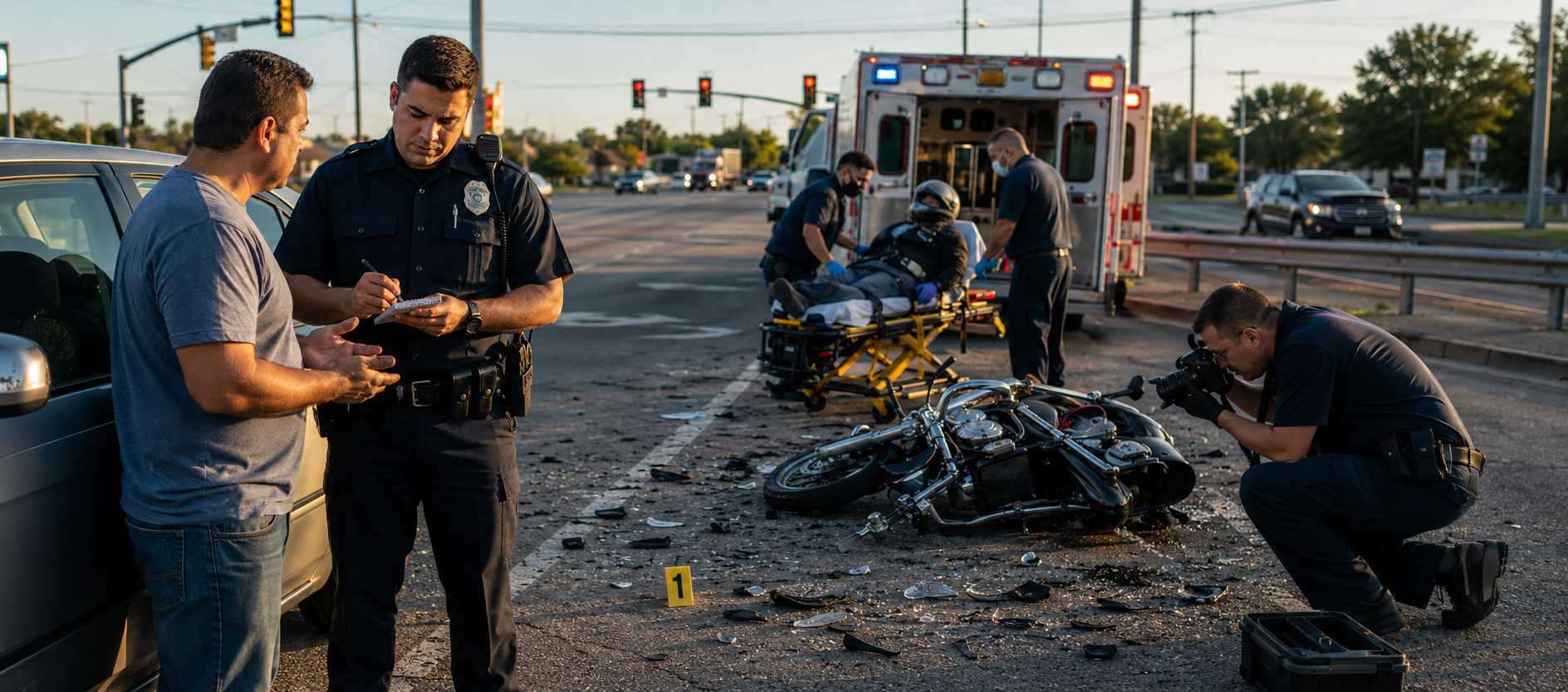
The officer was not there when the car turned left. The officer did not see the driver glance at a phone. The officer did not watch the motorcycle enter the intersection.
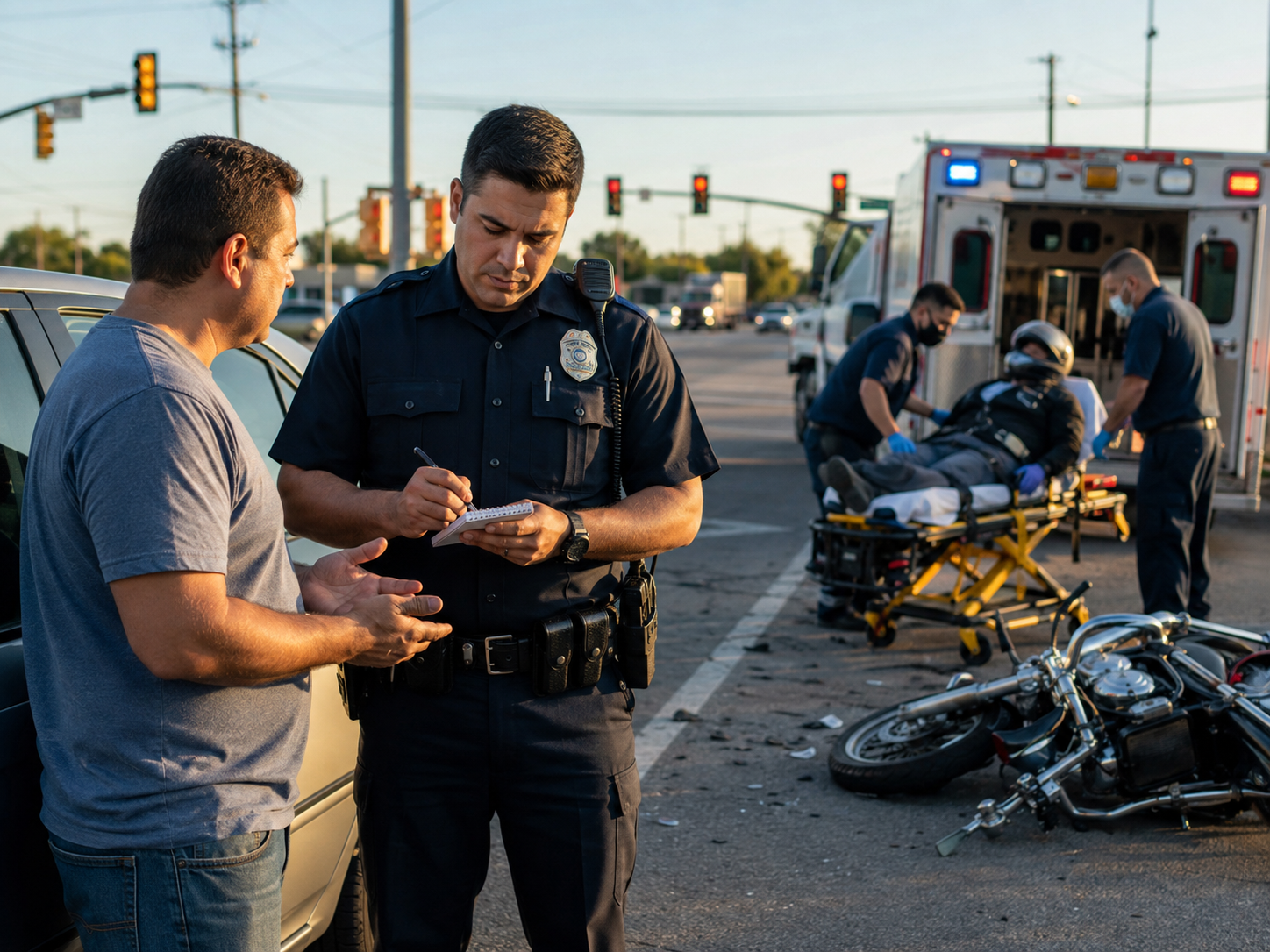
But twenty minutes later, the injured rider may be headed to the hospital while the driver remains at the scene, calm enough to give a complete version of what happened. That version can find its way into the Texas Peace Officer’s Crash Report before the motorcyclist ever gets a meaningful chance to speak.
An unfavorable report can create a serious problem. An adjuster may cite it when denying liability, reducing an offer, or arguing that the rider was speeding. But a report does not erase photographs, video, vehicle damage, physical evidence, phone records, witness testimony, or a qualified reconstruction of the crash.
01
Why the Wrong Version Can Land First
Most investigating officers arrive after impact. They must work with an incomplete scene, conflicting statements, damaged vehicles, traffic, injuries, and whatever evidence remains visible.
Motorcycle crashes create an additional imbalance: the person with the worst injuries is often the person least able to explain what happened. The other driver may speak first, repeat the same polished account to several people, and describe the motorcycle as “flying” or appearing “out of nowhere.”
Those phrases are not measurements. They are conclusions. When they are accepted without testing them against the physical evidence, the report can begin with a bad assumption and build from there.
02
What Can Be Wrong on a Texas Crash Report?
A Texas CR-3 may contain far more than names and insurance information. A mistake in any of these areas can affect the way an insurer evaluates the claim.
01
The Diagram
Vehicle positions, travel lanes, impact points, traffic controls, or the direction of movement may be drawn incorrectly.
02
Contributing Factors
The report may list speed, failure to yield, distraction, an unsafe turn, or another factor that does not fit the evidence.
03
The Narrative
A short summary may leave out the rider’s account, qualify uncertain facts as established, or rely too heavily on one driver’s statement.
04
People and Details
Witness information, insurance data, vehicle descriptions, injury status, road conditions, and basic identifying facts can be incomplete or wrong.
03
Can an Incorrect Police Report Be Corrected?
Sometimes. Texas law-enforcement reporting systems allow agencies to submit supplemental crash reports, but that does not mean an officer must change every disputed conclusion. The practical goal is to identify a specific factual error, support the requested change, and create a clear record of the evidence that contradicts the original report.
- 1
Get the Complete Report
Obtain the CR-3, all pages, supplements, diagrams, witness information, photographs, body-camera footage, dash-camera footage, and available incident records. Eligible people can request a CR-3 through TxDOT’s crash-report system.
- 2
Separate Facts from Opinions
A wrong license plate, witness name, road designation, vehicle location, or insurance entry is different from a disputed opinion about speed or fault. Be precise about what is incorrect and why.
- 3
Bring Supporting Evidence
Photographs, video, measurements, witness statements, electronic data, and medical records can give the investigating agency a concrete basis to review the report.
- 4
Contact the Investigating Agency
The agency that prepared the report—not the insurance adjuster—controls whether it will correct a factual error or submit a supplement. Keep the request calm, specific, and documented.
04
The Evidence Story Can Be Stronger Than the Report
The real question is not whether the report favors the rider. The real question is what can be proven.
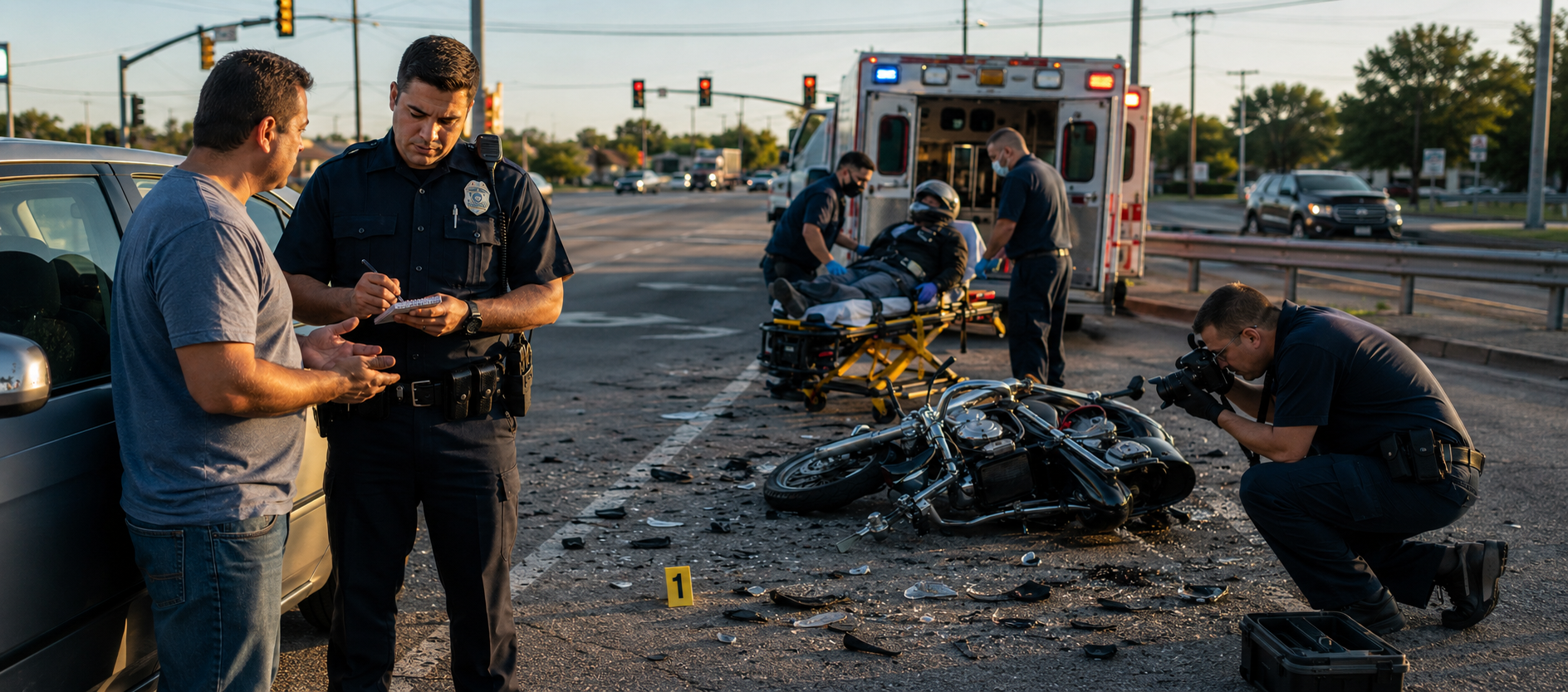
Video from businesses, homes, traffic systems, vehicles, helmets, or phones
Physical evidence including debris, gouges, tire marks, and points of rest
Vehicle damage that helps establish angle, direction, and point of impact
Witness accounts from people who actually saw the movement before impact
Electronic records such as phone data, event data, GPS, and onboard systems
Reconstruction using measurements, timing, sightlines, and crash dynamics
05
“The Motorcycle Was Speeding” Is Not a Measurement
Speed is one of the easiest accusations to make against a rider and one of the most damaging to leave unchallenged. A driver may judge a motorcycle’s approach incorrectly because of its smaller visual profile, then describe the motorcycle as speeding after the collision.
That does not mean every speed finding is wrong. It means the conclusion should be tested. Did anyone measure marks at the scene? Is there video? Does the damage pattern support the estimate? Was electronic data recovered? Could the driver see the motorcycle long enough to make a reliable judgment?
Assumption is not reconstruction. Repetition is not proof.
06
The Report Does Not Assign the Final Legal Percentage of Fault
Texas uses proportionate responsibility. Under Chapter 33 of the Texas Civil Practice and Remedies Code, a claimant generally cannot recover damages if the claimant’s percentage of responsibility is greater than 50 percent. If the claimant is 50 percent or less responsible, recoverable damages are reduced by that percentage.
That makes a blame dispute serious—but it does not turn the investigating officer’s initial report into the final allocation of responsibility. Fault may be evaluated through the complete evidence, negotiations, litigation, and ultimately the fact-finder if the case is tried.
Move Before the Evidence Does
What an Injured Rider Should Do Now
- Get medical treatment and follow the recommended care plan.
- Order the complete crash report and read every page carefully.
- Write down your memory of the crash while the details are fresh.
- Save photographs of the scene, motorcycle, vehicles, gear, and injuries.
- Preserve the motorcycle and damaged equipment before repairs or disposal.
- Identify nearby cameras and witnesses as quickly as possible.
- Avoid arguing about the report on social media or giving an unprepared recorded statement.
- Have a motorcycle accident lawyer evaluate the report against the evidence.
For more immediate post-crash guidance, read What to Do After a Motorcycle Accident: Expert Tips for Texas Riders.
The Report Is Not the End of the Story.
Let Motorcycle Man Investigate What Really Happened.
If a police report blamed you after a Texas motorcycle crash, do not let an insurance adjuster use it as the last word. Get the report. Preserve the evidence. Put the rider’s side of the story back into the case.