Texas Motorcycle Accident Claims
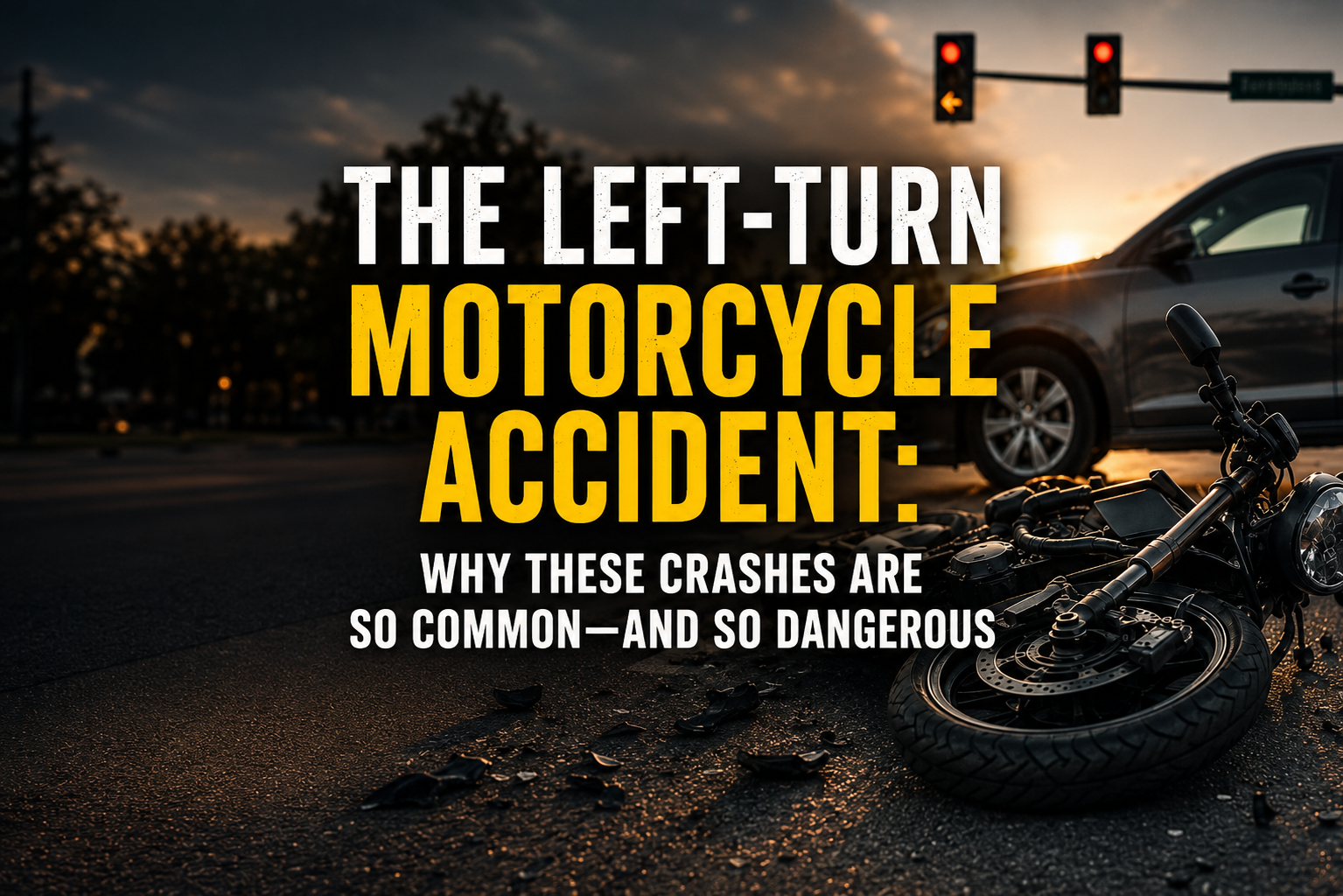
The Left-Turn Motorcycle Accident:
Why These Crashes Are So Dangerous
A driver turns across the path of an approaching motorcycle and leaves the rider with almost no time, distance, or safe direction to escape.
does not automatically excuse a driver’s failure to yield.
A Common and Devastating Crash
One Turn Can Put a Rider in an Impossible Situation
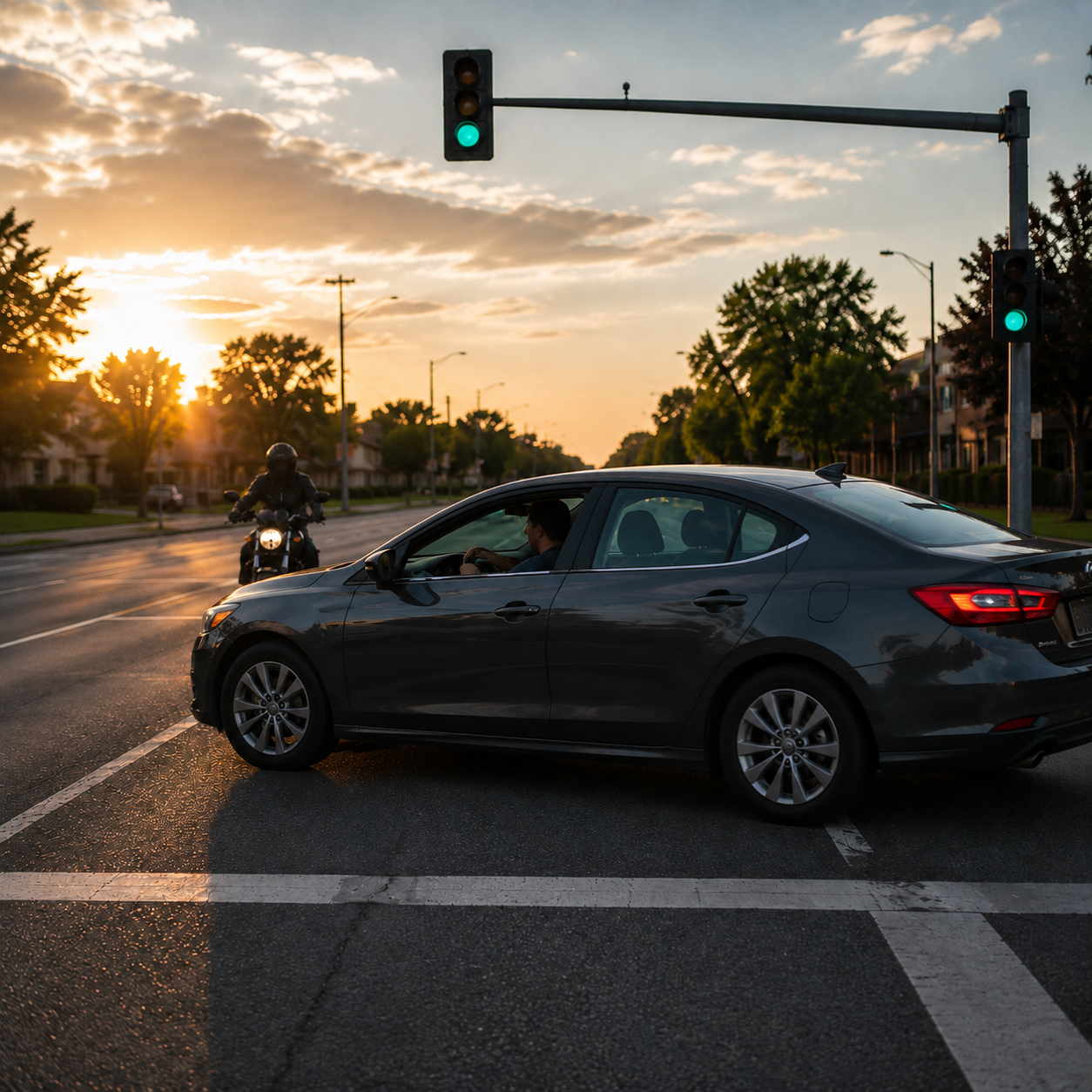
A driver waits at an intersection, driveway, parking-lot entrance, or median opening. A motorcycle approaches from the opposite direction with the right of way. The driver begins turning left and suddenly blocks the rider’s lane.
The motorcyclist may have only a second or two to brake, swerve, or choose between striking the vehicle and entering another lane of traffic.
Drivers frequently say they never saw the motorcycle or misjudged its speed. That explanation does not change the physical reality of the collision: a vehicle entered the rider’s path and created a hazard that may have been impossible to avoid.
Understanding the Collision
What Is a Left-Turn Motorcycle Accident?
These crashes usually happen when a vehicle turns across the path of an oncoming motorcycle that is proceeding straight.
01
Signal-Controlled Intersections
A driver with a solid green light turns left without yielding to an approaching motorcycle.
02
Driveways and Business Entrances
A vehicle turns into a shopping center, gas station, restaurant, or residential driveway.
03
Median Openings
A driver crosses multiple lanes or attempts a left turn through a divided roadway.
04
Uncontrolled Intersections
A driver misjudges the rider’s approach and enters the motorcycle’s lane without enough time to complete the turn.
Why It Keeps Happening
Why Are Left-Turn Motorcycle Crashes So Common?
Many drivers look toward approaching traffic without specifically looking for motorcycles. A rider can be directly within the driver’s field of view
and still fail to register as an approaching vehicle.
Motorcycles also have a narrow visual profile. That can make it more difficult for a driver to judge the rider’s distance and closing speed accurately.
Common Causes
What Leads a Driver to Turn Across a Motorcycle?
The Driver Does Not Look Specifically for Motorcycles
The driver may scan for cars and trucks but fail to consciously recognize the smaller motorcycle approaching the intersection.
The Driver Misjudges Speed or Distance
A motorcycle can appear farther away or slower than it really is. The driver may incorrectly believe there is enough time to complete the turn.
The Driver Is Distracted
Phones, navigation systems, passengers, addresses, and cross traffic can
take attention away from the approaching rider.
The Driver Tries to Beat the Motorcycle
Some drivers see the rider and rush the turn rather than waiting a few additional seconds for the motorcycle to pass.
Another Vehicle Blocks the Driver’s View
Trucks, SUVs, stopped traffic, signs, landscaping, and roadway design can temporarily conceal an approaching motorcycle.
Severe Impact
Why Are These Crashes So Dangerous?
The motorcycle rider is exposed, moving forward, and suddenly confronted with a vehicle crossing directly through the travel lane.
01
The Rider’s Path Is Suddenly Blocked
The motorcyclist may have almost no time to stop or choose a safe direction around the turning vehicle.
02
The Motorcycle Often Hits the Vehicle’s Side
The rider may strike a door, quarter panel, bumper, or passenger-side area before being thrown from the motorcycle.
03
There May Be Multiple Impacts
After the initial collision, the rider may strike the pavement, another vehicle, a curb, guardrail, or roadside object.
04
The Rider Has No Enclosed Protection
A motorcyclist does not have a passenger compartment, seat belt, airbag system, or steel vehicle frame for protection.
A Sudden Emergency
The Rider May Have Only Seconds to React
Once the vehicle enters the lane, every available option may carry serious risk.
01
Hard Braking
The rider may apply maximum braking but still lack enough distance to stop.
02
Swerving
Moving around the vehicle may place the motorcycle into oncoming traffic or another occupied lane.
03
Passing Behind the Vehicle
The driver may stop unexpectedly or continue moving into the rider’s escape route.
04
Bracing for Impact
When avoidance is no longer possible, the rider may have only an instant to prepare for the collision.
Life-Changing Consequences
Common Injuries in Left-Turn Motorcycle Accidents
rehabilitation, assistive devices, and ongoing medical care.
Texas Right-of-Way Issues
Who Usually Has the Right of Way?
When a motorcycle is proceeding straight and an oncoming driver intends to turn left, the turning driver generally must yield when the approaching motorcycle is close enough to present an immediate hazard.
A solid green traffic light does not automatically give the driver the right to turn across the motorcycle’s path. Unless the driver has a protected green arrow, the turn must still be completed safely.
Important
A Green Light Is Not Always a Protected Turn
A driver facing a solid green light may still be required to yield to oncoming motorcycles before beginning a left turn.
Failure to Keep a Proper Lookout
“I Didn’t See the Motorcycle” Is Not a Complete Defense
Drivers have a responsibility to observe approaching traffic before crossing a lane. Saying the motorcycle was not seen may support the conclusion that the driver failed to look carefully enough.
Was the motorcycle visible?
How long was it in the driver’s field of view?
Did the driver look again before turning?
Was the driver distracted?
Was the driver’s view obstructed?
Did the driver rush the turn?
Insurance Company Tactics
How Insurers Try to Blame the Motorcycle Rider
Even when the other driver turned directly across the rider’s path, the insurer may look for ways to shift part of the responsibility.
01
“The Rider Was Speeding”
Speed allegations should be tested against video, physical evidence, electronic data, witness accounts, and crash reconstruction.
02
“The Motorcycle Was Hard to See”
A motorcycle’s smaller profile does not eliminate the driver’s obligation to look carefully before crossing traffic.
03
“The Rider Could Have Avoided It”
This argument may ignore the extremely limited reaction time created by the turning driver.
04
“The Rider Came Out of Nowhere”
Vehicle positions, road design, lane markings, witnesses, and video may reveal whether the motorcycle was visible before the turn.
Proving What Happened
Evidence Can Defeat an Attempt to Blame the Rider
Left-turn motorcycle cases are frequently disputed. The driver may claim the motorcycle was speeding, appeared unexpectedly, or entered the intersection against a signal.
An early investigation can preserve the physical and electronic evidence needed to test those claims.
- Traffic-camera and surveillance video
- Dash-camera and helmet-camera footage
- Independent witness statements
- Vehicle and motorcycle damage
- Skid marks, debris, and impact locations
- Vehicle event-data information
- Phone records when distraction is suspected
- Medical records documenting the injuries

Protect Yourself and the Evidence
What Should a Rider Do After a Left-Turn Crash?
The scene can change quickly, witnesses may leave, and electronic footage may be overwritten.
The Motorcycle Man Difference
Motorcycle Experience Matters in a Left-Turn Case
A left-turn motorcycle case is not simply a car accident involving a smaller vehicle.

Legal Help for Injured Riders
Talk to Motorcycle Man After a Left-Turn Motorcycle Accident
A driver who turns left in front of a motorcycle can create a deadly hazard in an instant. The rider may have done everything right and still have no safe path around the vehicle.
Motorcycle Man understands the evidence, insurance defenses, severe injuries, and rider bias that frequently arise in left-turn motorcycle accident claims.
Injured in a Left-Turn Crash?
Do Not Let the Insurance Company Put the Rider on Trial
If another driver failed to yield, misjudged your approach, or turned across your lane, talk to Motorcycle Man about your rights and legal options.
Motorcycle Man fights for injured riders—not insurance companies.
This article provides general information and is not a substitute for legal advice regarding a specific motorcycle accident case.