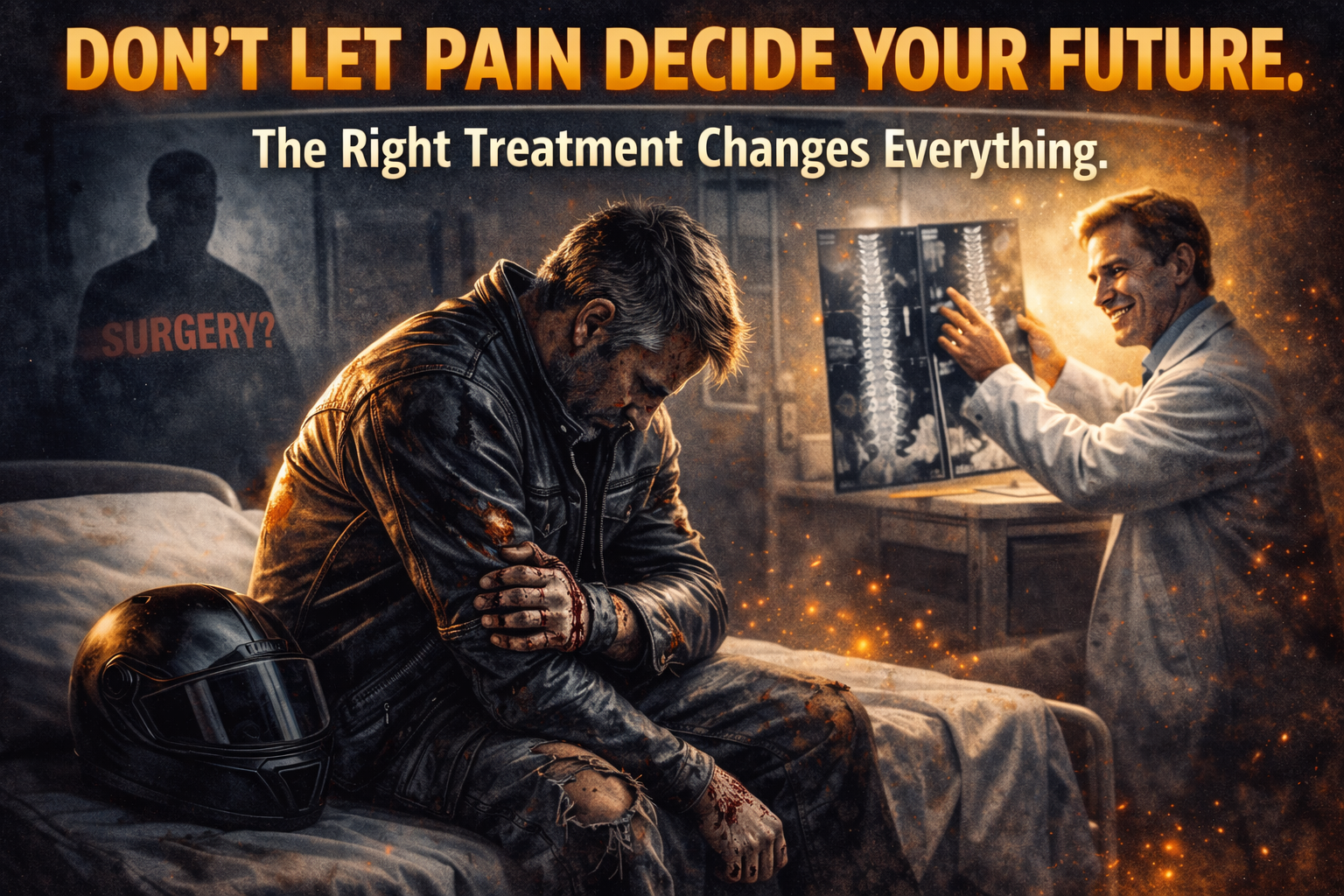
In An Anatomy of Pain, Dr. Abdul-Mahy Lalkhen, a specialist in pain medicine, breaks down the complex science of why we hurt. For someone in your position, the book offers a shift in perspective: pain is not always a direct measure of tissue damage; it is a protective output of the brain.
Here is a summary tailored to help you understand what might be happening in your body right now.
- Pain is a “Protector,” Not a Meter
Lalkhen explains that pain is an alarm system. In a motorcycle accident, your “alarm” went off for a good reason—to tell you something was wrong. However, in chronic or persistent pain, the alarm gets stuck in the “on” position even after the initial physical wounds (broken bones or road rash) have begun to heal.
- The Difference Between Hurt and Harm
This is a crucial distinction for recovery.
- Acute Pain: This is the immediate “ouch” that signals tissue damage.
- Chronic Pain: This is more like a software glitch. The nerves become hypersensitive, a process called central sensitization.
Lalkhen argues that the brain can “learn” to be in pain. The neural pathways responsible for carrying pain signals become more efficient at their jobs, meaning it takes less and less stimulus to trigger a massive pain response.
- The “Biopsychosocial” Model
Lalkhen moves away from the old idea that pain is “all in your head” or “all in your body.” Instead, he uses the Biopsychosocial model, which suggests your pain is influenced by:
- Bio: The physical injury from the crash.
- Psycho: Your stress levels, fear of re-injury, and mood.
- Social: Your ability to work, your support system, and your finances.
If you are worried about your bike, your job, or your future, your nervous system stays in a state of “high alert,” which actually amplifies the physical pain you feel.
- Why Meds Don’t Always Work
Lalkhen is very candid about the limitations of “magic bullets.”
- Opioids: He explains why they are often ineffective for long-term nerve pain and can sometimes make you more sensitive to pain over time (opioid-induced hyperalgesia).
- Injections: While they can help, they are often temporary fixes rather than cures.
- The Path Forward: Management, Not Just “Cure”
The book shifts the goal from a “100% pain-free life” to functional recovery. This involves:
- Pacing: Learning to move without “flaring up” the nervous system.
- Desensitization: Gently retraining the brain to realize that certain movements are safe.
- Understanding: Simply learning how pain works (as you are doing now) can actually lower the threat level your brain perceives, which can dampen the pain signal.
A Note for Your Recovery
Right now, your brain is likely stuck in a “high threat” mode because of the trauma of the accident. Lalkhen’s message is ultimately one of hope: because the nervous system is plastic (it can change), it is possible to “unlearn” some of these pain patterns through a combination of physical therapy, psychological support, and gradual movement.
If you have been in a Motorcycle accident or know someone who has been and is still experiencing pain call Deano (832) 444-6085 or fill out the JUSTICE FORM for an immediate response.