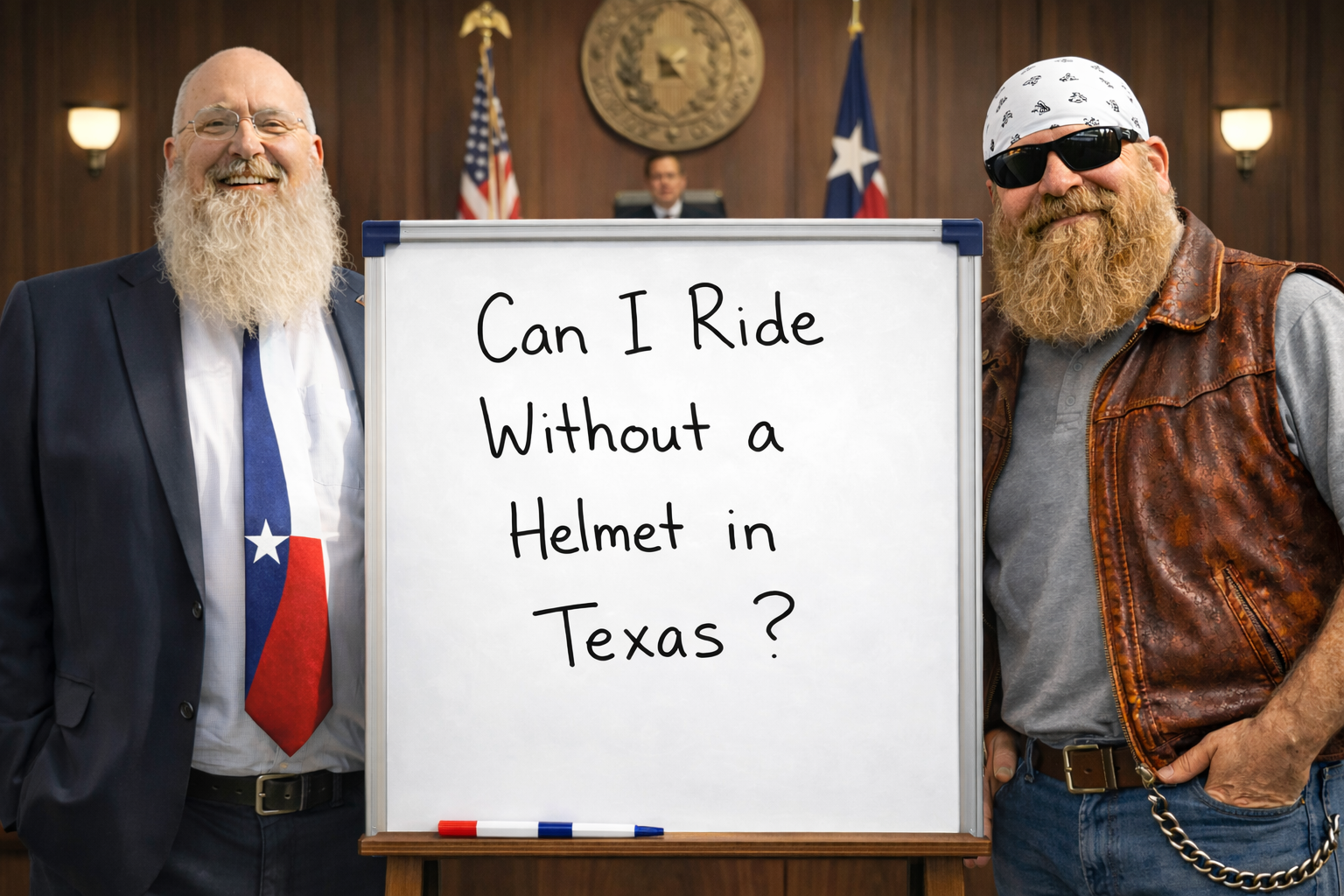
Motorcycle Man believes a safety course should be required of all riders, but certainly those without helmets.
But Deano is right. This is America not Norway, Johnny!
In Texas, the requirement to wear a helmet depends on your age and certain safety or insurance milestones. If you are under 21, there are no exceptions; you and any passengers must wear a DOT-approved helmet at all times.
If you are 21 or older, you can legally ride without a helmet if you meet one of the following two requirements:
- Completion of a Safety Course
You must successfully complete a motorcycle operator training and safety course approved by the Texas Department of Licensing and Regulation (TDLR).
- Note: Since you must take an approved safety course to obtain your Class M license in Texas anyway, most licensed adult riders in the state already meet this specific legal hurdle for the helmet exemption.
- Medical Insurance Coverage
Alternatively, you can ride helmet-free if you are covered by a health insurance plan that provides medical benefits for injuries incurred in a motorcycle accident.
- While a previous version of the law required a specific minimum of $10,000 in coverage, current statutes simply require “appropriate” health insurance.
- Your insurance card or a letter from your provider serves as proof.
Key Legal Nuances for Texas Riders
- Secondary Offense Rule: Under Texas Transportation Code § 661.003, a peace officer cannot pull you over solely to check if you have completed the safety course or have insurance. They must have another primary reason for the stop (like speeding or a broken taillight) before they can cite you for a helmet violation.
- Proof of Exemption: You are not strictly required to carry your safety course completion card on your person while riding, but having it (or your insurance card) readily available can prevent administrative headaches if you are stopped for another reason.
- Passenger Rules: Passengers are held to the same standards. If they are 21 or older, they are exempt if they have completed the course or if the operator meets the exemption requirements.
While it is legal to ride without a helmet, Motorcycle Man has his eye on the Insurance Defense Industry and the fact that Texas follows the law of “comparative negligence.” That means the Insurance Defense Industry will point the finger at a rider without a helmet who suffers a traumatic brain injury — arguing the rider is partially responsible for their own head injuries, which can impact potential recovery. If rider responsibility reaches 51% we’re done. No recovery.
That is why Motorcycle Man wants a safety course requirement because it will act as a sort of ‘license’ from the Texas Legislature that this is Texas and no man may say it is his fault for not wearing a helmet. He took a course and he or she is qualified for this risk.
If you want to understand riders like Motorcycle Man understands riders, then read about the ‘egg shell’ or ‘thin skull’ plaintiff and what the olde time law says about the Insurance Defense Industry blaming riders for not wearing helmets: The Thin Skull Law of the Land
If you find yourself in need of a Motorcycle injury lawyer you found the right place
📞 Call Deano – Client Coordinator 832-444-6085